Attendees reached for search first, and it wasn’t built to help them. I studied how 17,000 conference-goers found sessions, rooms, and schedules, and what it took to get them there.
Role: Lead UX researcher
Methods: Attendee survey, timed task-based usability testing, journey mapping
Participants: 313 in the survey and testing, 17 in timed tasks in the app
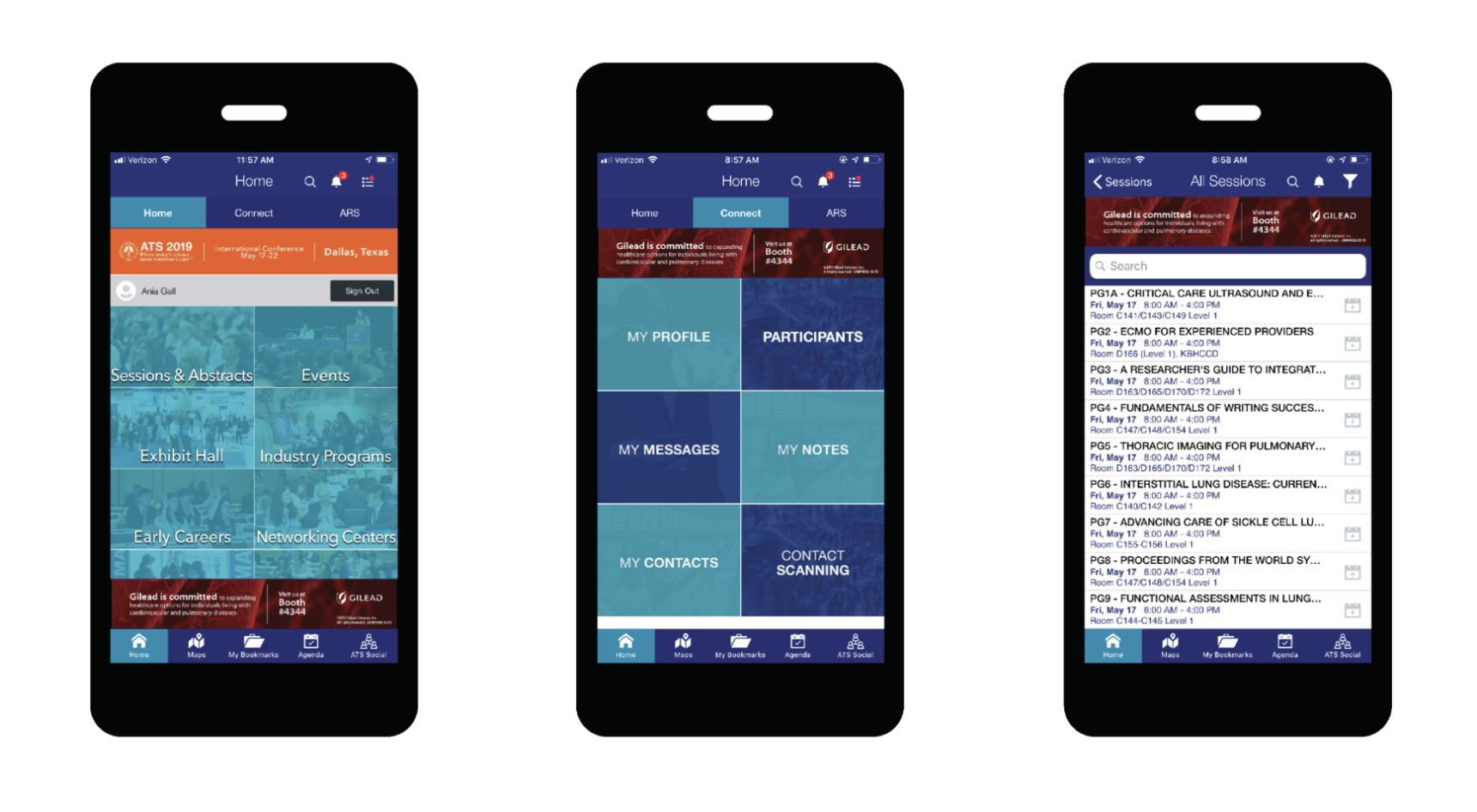
The in-person conference app: home screen, networking tools, and the session list, where long titles were cut off and rooms showed no building.
The question
The in-person conference app was where attendees planned and navigated the event. Before moving online, we needed to know: how do people actually find what they need, and where do they get stuck?
What I found
Search was the first move, and it wasn’t seamless. Attendees went straight to search, but it needed exact names. They wished they could search by first name, last name, topic, and more.
Everyone got there eventually. All 17 participants found their sessions, but only by learning the search’s limits through trial and error.
Maps showed room numbers without buildings. People could see where a session was, but not how to get there.
Calendar sync only worked for people who opted in at download. Everyone else was missing sessions without realizing it.
The Wi-Fi in the exhibition hall was unreliable. Attendees couldn’t count on the app to navigate that space.
What it changed
For the in-person event, we added a downloadable PDF map so attendees could find their way without a connection. For the virtual platform, the findings put sessions and agenda up front, with clear paths to speakers, exhibitors, and industry programs.
What I learned
People will work around a tool that doesn’t fit how they think. They learned the search and its limits, but they shouldn’t have had to. Search should meet people where they are: by name, by topic, by however they remember it. Next, I would measure the virtual platform against the same usability KPIs to compare it with the in-person app.